The Complete Guide to Trading Card Vending Machines for Pokémon Cards

High-Ticket Automated Retail · AI-Proof Income · From $2,850

Trading Card Vending Machines for Sale — TCG Kiosks from $2,850

Wholesale Pokémon booster packs cost $6–$10 from authorized distributors. Vend them at $20–$35 and clear 250%+ margins. No age gates. No ID scanners. No compliance overhead. VTM machines ship fully assembled from Cleveland, Ohio with Nayax cashless payments, 22mm precision coils, hard-shell pack cases, a 1-year warranty, and 50% down financing.

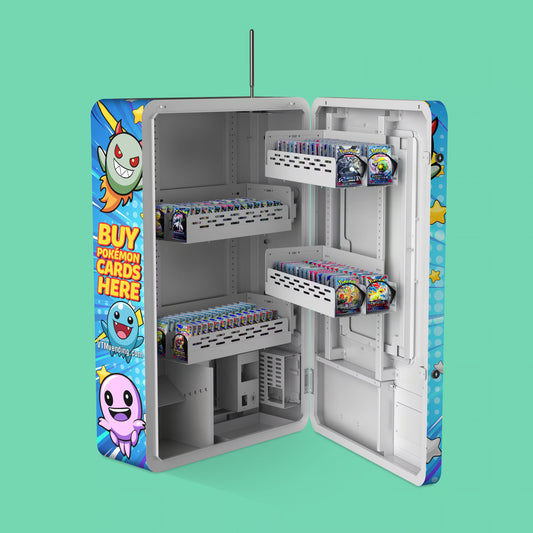
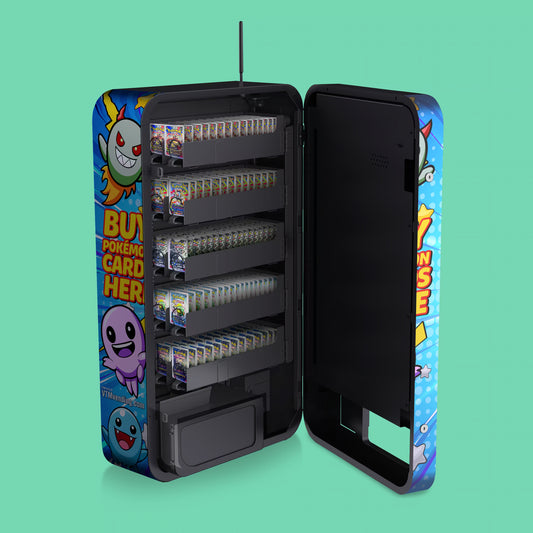
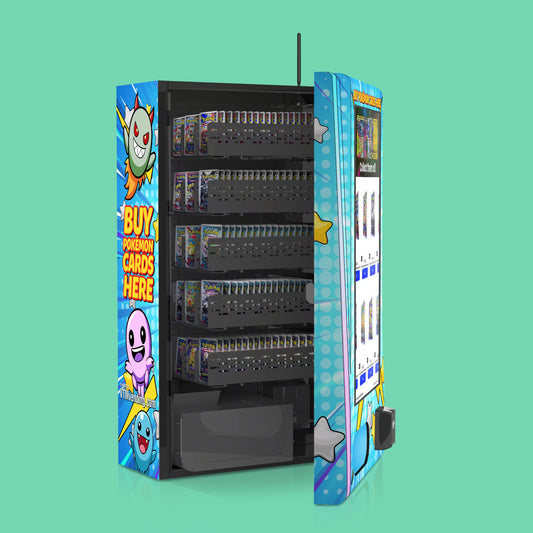
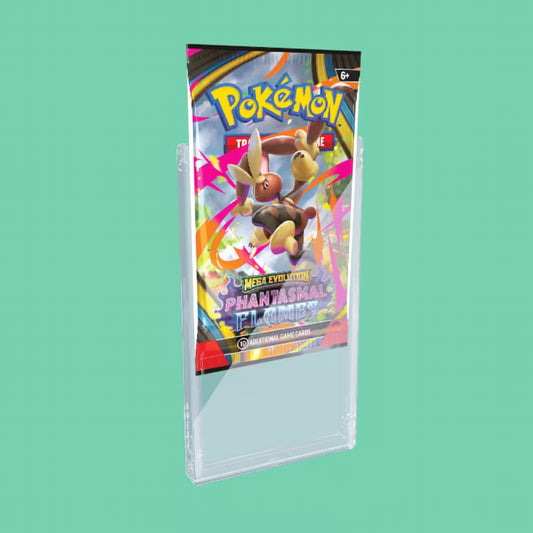
22mm precision coils dispensing sealed Pokémon booster packs inside a VTM trading card vending machine — jam-free mint-condition delivery for every vend
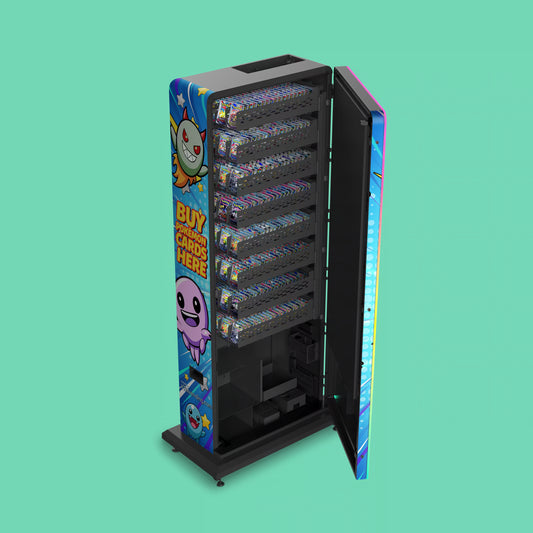
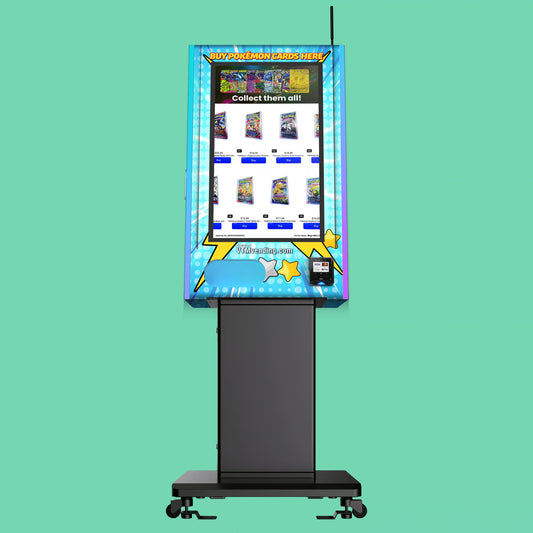
Slim Pack Tower 2.0 TCG vending machine displaying sealed Pokémon booster packs in acrylic top-loader cases on 22mm coils
$2,850Starting Price
50%Down Financing
4–7 Mo.Avg. Break-Even
1,500+Machines Shipped
1 YearFull Warranty

Vending is evolving. Premium products are replacing $1.50 snacks, and trading cards are leading the shift. Real demand, 50–63% gross margins at distributor pricing, customers who come back for every new set release.

Stop selling $2 snacks. Start selling $20 pulls.

New to the category? Start here first: The Complete Guide to Trading Card Vending Machines — how they work, the difference between official TPC machines and independent operator hardware, and what's coming in 2026.

The Math: ~$908/mo Net at Just 3 Sales a Day

On the secondary market (eBay, Amazon, TCGplayer), Pokémon booster packs typically cost $8–$15 depending on the set. Vended at a conservative ~250% margin, the numbers work even at very low daily volume.

Example Scenario

Buy at $10 → Vend at $25 · Just 3 packs/day

Revenue

  • Daily (3 × $25)$75
  • Monthly (30 days)$2,250

Monthly Costs

  • COGS — inventory (3 × $10 × 30)–$900
  • Location commission (15%)–$337.50
  • Credit card fees (~3.5%)–$78.75
  • Transaction fees ($0.20 × 90)–$18
  • Card reader fee–$7.95
  • Total costs–$1,342.20
Net Monthly Profit — Per Machine ~$908 Conservative pricing. Just 3 sales per day. Strong placements routinely run 3× this volume → $2,700+/mo net.

Want to run your own numbers — different location, pricing, or volume?

🧮 Calculate Your Own Profit →

What Packs Actually Cost on the Secondary Market — Live eBay Data

The $10 COGS in the math above isn't a made-up number. Here's what sealed Pokémon booster boxes are actually selling for on eBay right now, with the per-pack cost calculated from each 36-pack box. Most current-era sets land in the $7–$11 per-pack range — exactly where conservative vending math works.

Set Listings Min Box Avg Box Max Box Per Pack
Perfect Order (new) 33 $105.50 $197.62 $225.00 $5.49
Surging Sparks (SV08) 29 $231.50 $267.91 $299.00 $7.44
Journey Together Enhanced 10 $265.00 $279.08 $309.89 $7.75
Journey Together (Regular) 1 $280.00 $280.00 $280.00 $7.78
Temporal Forces (SV05) 2 $285.00 $287.50 $289.99 $7.99
Scarlet & Violet Base (SV01) 6 $275.00 $290.16 $306.00 $8.06
Mega Evolution Enhanced 18 $182.50 $294.89 $350.00 $8.19
Paradox Rift (SV04) 3 $290.00 $296.33 $299.99 $8.23
Stellar Crown (SV07) 3 $300.00 $338.32 $374.95 $9.40
Twilight Masquerade (SV06) 1 $339.00 $339.00 $339.00 $9.42
Obsidian Flames (SV03) 2 $315.00 $347.50 $379.99 $9.65
Mega Evolution Phantasmal Flames 7 $300.00 $381.43 $499.99 $10.60
Paldea Evolved (SV02) 2 $490.00 $505.00 $520.00 $14.03
Destined Rivals (SV10) 1 $599.00 $599.00 $599.00 $16.64

How to read this for your machine: a 36-pack booster box loads across 36 coils. Take the avg box price, divide by 36 for your per-pack COGS, then vend at ~2.5× markup (the ~250% margin used in the math above). Example using Mega Evolution Enhanced: $294.89/box → $8.19/pack cost → vend at $20 → $11.81 gross margin per pack before operating expenses. Premium sets like Paldea Evolved ($14.03/pack) and Destined Rivals ($16.64/pack) support higher vend prices ($35–$42/pack) because the collector demand is elevated and customers pay a premium for scarcity.

Note on the data: Figures pulled from live eBay completed-sale listings. Box pricing swings 10–20% week to week with set popularity and release timing. Treat these as a realistic sourcing baseline, not a locked price.

Run the numbers on your set choices, pricing, and daily volume:

🧮 Calculate Your Own Profit →
Slim Pack Tower 2.0 free-standing TCG vending machine with 43-inch high-resolution touchscreen — sleek high-capacity kiosk for dispensing sealed trading card booster packs Slim Pack Tower 2.0 interior loaded with sealed booster packs inside acrylic top-loader hard cases on 22mm precision coils

Slim Pack Tower 2.0 — The Flagship TCG Kiosk

The highest-capacity, large-screen TCG vending machine purpose-built for Pokémon and sports card packs. 24 aisles, 400+ pack capacity, a 43-inch high-resolution touchscreen, and the same 22mm coil + acrylic case protection system across the entire product lineup. Free-standing floor kiosk. Locking wheels. Ships fully assembled from Cleveland, Ohio.

43" TouchscreenHigh-resolution product browser. On-screen ad campaigns supported.
400+ Pack Capacity24 aisles across 19 rows. Fewer restock visits; more revenue per service.
22mm Precision CoilsSized for sealed pack dimensions. Zero drops, zero corner damage.
Nayax VPOS TouchVisa, MC, Amex, Discover, Apple Pay, Google Pay, Samsung Pay, NFC tap.
VTM Cloud SoftwareFree Year 1. Remote inventory, pricing, and sales dashboards from any device.
Ships AssembledCleveland, OH. No assembly required. Nationwide delivery.

Important: These Are Independent Operator Machines

Official Pokémon Company vending machines are not for sale — ever. The units you see at Kroger, Safeway, and H-E-B are owned and operated exclusively by The Pokémon Company International. What you're looking at on this page is independent operator hardware: machines purchased outright by small business owners and placed in malls, hobby shops, arcades, barbershops, college campuses, and entertainment venues.

You own the machine. You set the pricing. You source the inventory (authentic sealed product from authorized distributors or the secondary market). No license from TPCi is needed — resale of genuine Pokémon products is protected under the U.S. First Sale Doctrine.

Full breakdown of how the ecosystem works — TPC fleet coverage, find-a-machine tools, consumer FAQ — lives on the pillar guide. Read the complete consumer guide →

TCG Vending Machine Prices & All-In Startup Cost

Transparent pricing across the VTM lineup. Three machines to match three operator stages — starter placement, mid-tier scaling, high-traffic flagship.

$2,850 Mini Wall — Starter Wall-mounted. 150–200+ pack capacity. 22mm coils, Nayax cashless, touchscreen. Best for barbershops, small retail, first placements.
$3,450 Slim Wall — Mid-Tier Wall-mounted with upgraded capacity. Same payment + coil system as Mini. The step up when the Mini Wall fills up or traffic justifies more SKUs.
$5,000 Slim Pack Tower 2.0 — Flagship Free-standing floor kiosk. 400+ packs, 43" touchscreen, on-screen ads, full telemetry. Built for malls, arcades, airports, and high-volume venues.

What to Actually Budget: All-In First-Year Cost

Machine price is only part of the number. Here's the realistic first-operator budget using VTM hardware, distributor sourcing, and standard venue insurance.

Cost Item Range Notes
Machine hardware $2,850 – $5,000 Mini Wall / Slim Wall / Slim Tower
Opening inventory $800 – $1,500 Booster packs, blister packs, tins — distributor pricing
LLC + EIN + sales tax permit $50 – $200 State fees vary; most operators under $150 total
Business insurance (BOP) $58/mo Required by most venues; covers crime + vandalism
Nayax cellular data (optional) $7.95/mo Free if venue has reliable WiFi
VTM software (Year 1) Free Included with every machine purchase
Total all-in (typical) $4,000 – $7,500 Covers machine + inventory + legal + insurance

Financing available: 50% down on every machine. That's $1,425 down on the Mini Wall or $2,500 down on the Slim Tower to get operational. Monthly net at average placement performance ($750–$1,200) covers the remaining balance within the break-even window. Bulk pricing available for operators purchasing 3+ units — call (888) 373-8158 for fleet quotes.

Trading Card Vending Machines for Sale — Full Lineup

Three machines. One coil system. One payment stack. Same warranty and return policy across the lineup. Pick the footprint that matches your placement — the economics scale with it.

VTM Mini Wall TCG card vending machine side view

Mini Wall

$2,850
  • Wall-mounted — minimal footprint
  • 150–200+ pack capacity
  • 22mm precision coils + acrylic cases
  • Full touchscreen product selection
  • Nayax cashless: Visa, MC, Amex, Apple Pay, Google Pay
  • WiFi + cellular connectivity
  • Cloud inventory dashboard (free Y1)
  • 1-year full warranty, 30-day returns
  • 50% down financing available
View Mini Wall →
VTM Slim Wall TCG card vending machine front view

Slim Wall

$3,450
  • Wall-mounted, upgraded capacity
  • Same 22mm coils + acrylic cases
  • Full touchscreen product selection
  • Nayax cashless (same as Mini)
  • WiFi + cellular connectivity
  • Cloud inventory dashboard (free Y1)
  • 1-year full warranty, 30-day returns
  • 50% down financing available
  • The step up when Mini Wall fills up
View Slim Wall →
VTM Slim Pack Tower 2.0 free-standing TCG vending machine with 43-inch touchscreen

Slim Pack Tower 2.0

$5,000
  • Free-standing floor kiosk — mall/arcade ready
  • 400+ packs across 24 aisles
  • 43" high-resolution touchscreen
  • 22mm precision coils + acrylic cases
  • Nayax cashless (same as Mini/Slim Wall)
  • On-screen ad campaigns supported
  • Cloud inventory + pricing management
  • 1-year full warranty, 30-day returns
  • 50% down financing available
View Slim Pack Tower 2.0 →

Side-by-Side Specs

Spec Mini Wall — $2,850 Slim Wall — $3,450 Slim Pack Tower 2.0 — $5,000
Mounting Wall-mounted Wall-mounted Free-standing floor
Capacity 150–200+ packs Upgraded 400+ / 24 aisles
Touchscreen Yes Yes 43" high-res
Payment Nayax cashless Nayax cashless Nayax cashless
Coil system 22mm precision 22mm precision 22mm precision
On-screen ads Yes
Cloud dashboard Yes (free Y1) Yes (free Y1) Yes (free Y1)
Warranty 1 year 1 year 1 year
Financing 50% down 50% down 50% down
Avg. break-even 4–6 months 4–7 months 5–9 months
Best for Barbershops, small retail, test placements Hobby shops, game stores, mid-traffic Malls, arcades, airports, high-traffic

VTM Coil Machines vs. Elevator Kiosks — Why the Same Revenue Costs Half as Much

The most common competitor pitch in this category is an elevator-style kiosk — a robotic arm that lowers each product to the tray instead of dropping it. Vendors like VMFS USA and CustomVending.com price these at $10,000–$15,000+. They work. They also solve a problem that VTM solved with engineering instead of robotics: dispensing flat sealed packs without corner damage.

VTM Coil + Case System

$2,850 – $5,000 · 4–9 month ROI

  • 22mm coil sized specifically for sealed card pack dimensions
  • Rigid acrylic hard-shell case around every pack
  • Zero free-fall — the case is held by the coil end-to-end
  • Few moving parts = lower maintenance, higher uptime
  • Ships assembled from Cleveland, OH — no lead time
  • 1-year full warranty, 30-day returns
Elevator Kiosk Competitors

$10,000 – $15,000+ · 18–24 month ROI

  • Robotic arm / motorized lift mechanism
  • $5,000–$10,000 premium vs. coil systems for the same outcome
  • Motors, belts, sensors — more points of mechanical failure
  • Higher maintenance risk, longer downtime per service call
  • 6–12 week lead times from FL or overseas manufacturers
  • Warranty and return terms often unpublished

At equivalent placement performance, the math works out cleanly: a $5,000 Slim Tower producing $1,000/month net breaks even in 5 months. A $13,275 elevator kiosk producing the same $1,000/month net breaks even in 13+ months. Same revenue. Same product. Three times as long to recover capital.

The honest take: elevator kiosks aren't bad machines — they're overpriced for what this specific job requires. The "elevator premium" was built to compensate for generic coils that weren't designed for flat card packs. Our 22mm coil is designed for exactly that use case. The elevator was a workaround. The coil-and-case is the purpose-built solution.

How VTM Protects Every Pack — 22mm Coils + Acrylic Cases

Card condition is everything to collectors. Corner damage reduces resale confidence and drives customer complaints. VTM's system eliminates both without needing an elevator.

🛡️Acrylic Top-Loader CasesRigid hard-shell case prevents corner damage, bending, and wrapper scuffing on every product.
⚙️22mm Precision CoilsCustom coil diameter sized for card product dimensions. Secure grip, smooth release, zero jams.
🚫No Robotic LiftNo motors, belts, or sensors to fail. Lower maintenance, lower downtime, lower hardware cost.
Mint Every TimeCustomers receive pack-fresh products. No damage complaints, no refunds, no lost trust.
VTM acrylic protective top-loader case for Pokémon and TCG vending machines
Every pack sits in its own acrylic case — corners stay perfect. Shop Cases →
Pokémon tins and booster packs loaded into 22mm spiral coils
22mm coils hold each product securely until dispensed. Shop Coils →

What You Can Vend & What You'll Make Per Pack

VTM machines vend the full range of sealed TCG product — Pokémon is the volume driver, but the 22mm coil + acrylic case system works for anything in the standard booster-pack form factor.

Product / Set Wholesale Cost Vend Price (~250% markup) Profit / Pack
Journey Together Booster $5.50 $13.75 $8.25
Destined Rivals Booster $6.12 $15.30 $9.18
Mega Evolution — Ascended Heroes $6.50 $16.25 $9.75
Prismatic Evolutions Booster $8.38 $20.95 $12.57
Black Bolt / White Flare $8.50 $21.25 $12.75
Scarlet & Violet 151 $23.67 $59.18 $35.51
Prismatic Evolutions (6-Pack Bundle) $11.16 $27.90 $16.74
Mini Tins: Prismatic Evolutions $18.12 $45.30 $27.18
Character Tin: Mega Charizard $36.00 $90.00 $54.00
Accessories (sleeves, loaders) $2–$4 $8–$12 $5–$8

Beyond Pokémon: the same machines vend sports cards (Topps, Panini, Fanatics), anime TCG (One Piece, Yu-Gi-Oh!, Lorcana, Dragon Ball, Digimon), Magic: The Gathering boosters, and graded PSA/BGS slabs. The best operators match inventory to current release cycles and collector demand — fresh rotation consistently outperforms a static product shelf.

How to Start Your TCG Vending Business — 5 Steps

Buying a Trading Card Vending Machine is a capital deployment decision, not a retail purchase. Treat it like equipment acquisition for a small business: validate the plan, confirm the economics, and have the infrastructure in place before the machine arrives.

  1. 1
    Choose your machine and purchase.Mini Wall ($2,850) for a lower-capital pilot placement. Slim Wall ($3,450) for mid-traffic hobby/game venues. Slim Pack Tower 2.0 ($5,000) for mall, arcade, and high-traffic flagship locations. Order at vapetm.com or call (888) 373-8158. 50% down financing available.
  2. 2
    Register your business.Form an LLC ($50–$150, state-specific, 1–5 business days), get a federal EIN from the IRS (free, 10 minutes online), and apply for a state sales tax permit (vending is taxable in nearly every state). Required to open wholesale distributor accounts.
  3. 3
    Own it, then sell it.Counterintuitive but critical: buy the machine before you lock the placement. You cannot pitch a venue manager with real confidence until you've physically handled the unit and can demo it in person. Machines sitting in a garage close deals that cold pitches can't — and the motivation to go get the placement shifts once the capital is committed.
  4. 4
    Open distributor accounts + build secondary market channels.Tier 1: GTS Distribution, Southern Hobby, Alliance Game Distributors (53–63% gross margin at standard vend prices). Tier 2: Pokémon Center / Topps direct at MSRP with allocation limits. Tier 3: eBay verified sellers, TCGplayer storefronts, local shops — for filling gaps when distributor allocation runs tight (which it does, often). The Pokémon Supply Chain Buyer's Guide covers the full sourcing playbook.
  5. 5
    Launch, monitor, optimize.Load a tiered mix — single boosters at $8–10, blister packs at $12–16, premium tins/ETBs in one or two aisles. Monitor daily via the VTM mobile dashboard from day one. Run a single-machine pilot for 8–12 weeks before scaling. Operators who rush to 5+ units before validating a model fail; operators who pilot, prove ROI, then scale systematically build 6–10 machine routes generating $10,000–$20,000/month gross.

Where to Source Inventory

Your COGS is the most operationally important variable in this business. Distributor sourcing gets you 53–63% gross margin. Retail sourcing compresses that to 15–25%. The difference is the difference between a cash-flow asset and a break-even grind.

1. Authorized Distributors (primary channel). GTS Distribution, Southern Hobby, Alliance Game Distributors. Best wholesale pricing. Requires LLC, EIN, and business review. Southern Hobby currently restricts new accounts to brick-and-mortar operators; GTS is more accessible. Worth pursuing aggressively — VTM's onboarding includes help with the application process.

2. Secondary Market (gap filler). eBay verified sellers, TCGplayer, local card shops, bulk wholesalers. You'll pay above distributor cost. You'll also find product your distributor can't ship you during allocation shortages. An empty coil earns zero — a coil stocked at slightly lower margin still prints.

3. Direct Retail (last resort). Target, Walmart, Pokémon Center drops. Thin margins because you're paying MSRP. Useful in a pinch during new-set windows when distributors are out and secondary market has spiked.

Supply chain context: The Pokémon Company's printing partner (Millennium Print Group) won't have meaningful new capacity online until late 2028. Demand continues to outpace supply structurally through that window. Smart operators treat sourcing like a portfolio — never overexposed to a single SKU, never dependent on a single channel, always stocked.

Deep dive: The complete sourcing playbook — Millennium Print capacity timeline, how to buy on the secondary market without overpaying, how to spot counterfeits. Read the Pokémon Supply Chain Buyer's Guide →

Where to Place Your Machine

Location is the single biggest driver of vending revenue — bigger than machine type, product mix, or pricing. A strong placement turns a $5,000 machine into a $2,000/month asset. A weak placement turns the same machine into break-even noise.

Placement Types Ranked by Operator-Reported Performance

  1. Hobby & game shops — highest conversion; built-in collector audience
  2. Malls & shopping centers — near GameStop, FYE, toy stores, food court anchors
  3. Arcades & family entertainment centers — impulse-driven foot traffic
  4. Barbershops & tattoo parlors — captive 20–45 minute wait times, strong 18–35 demographic
  5. Gas stations & convenience stores — high daily repeat traffic, impulse environment
  6. College campuses — student unions, campus recreation centers
  7. Airports (post-security) — supports 200–300% convenience premium pricing
  8. Movie theaters, bowling alleys, laundromats — family and captive-wait traffic

Venue Economics

Most operators negotiate one of two arrangements with venues: a flat monthly rent ($100–$300) or a revenue share (10–15%). A revenue share over 20% is almost always worth walking away from — that's margin you can't recover at scale. VTM includes a location pitch script, revenue-share negotiation framework, and venue vetting checklist with every machine purchase.

What to avoid: major grocery chains. Kroger, Safeway, Albertsons, and H-E-B have exclusive vending partnerships with TPCi — they will not host independent operator machines, and pitching there is wasted effort. The rest of the retail universe is uncontested.

The Biggest Mistakes New Operators Make

Trading card vending success comes down to avoiding the common mistakes that quietly kill margins. New operators lose more money to sourcing, presentation, and venue decisions than they ever lose to machine cost.

Buying low-quality or gray-market inventory. Counterfeit packs are estimated at 15–20% of online TCG sales. One fake in your machine and you've burned every customer who sees it. Always buy from verified sellers with strong transaction histories. Inspect on arrival.

Skipping pack protection. Unprotected packs take corner damage on every drop. Bent wrappers, scuffed foil, and torn edges kill resale confidence and drive refund demands. Acrylic top-loader cases on 22mm coils solve this — don't skip them.

Agreeing to 25%+ venue commissions. Venue hosts sometimes ask for 25–30% of gross. That's a margin killer. 10–15% is the healthy range — or a flat monthly rent if volume is unpredictable. Negotiate down or walk away.

Treating it like impulse retail. This is repeat, enthusiasm-driven buying. Customers who like your machine check it weekly. Stock consistency matters more than variety. Running out of the hot set on release week costs you the next three restock cycles of that customer's business.

Refusing the secondary market on principle. Some operators refuse to buy above distributor cost even when machines sit half empty. An empty coil makes zero revenue. A stocked coil at slightly lower margin still prints. The operators who scale are the ones who stay flexible.

1,500+ Machines Shipped. 50 States. Real Operators.

1,500+Machines Shipped
50States Served
$750–$1,800+Monthly Net / Machine
4–7 Mo.Avg. ROI
50–63%Gross Margin

Ready to Buy Your First TCG Vending Machine?

From $2,850. Ships assembled from Cleveland, Ohio. 22mm coils, Nayax cashless, 43" touchscreen on the flagship. 50% down financing. 1-year warranty. 30-day returns. Free software Year 1.

🛒 View the Lineup 📞 (888) 373-8158

Frequently Asked Questions — Buying & Operating

What's the difference between the Mini Wall, Slim Wall, and Slim Tower?

Mini Wall ($2,850) — wall-mounted, 150–200+ pack capacity. Starter unit. Best for barbershops, small retail, and first-placement pilots.

Slim Wall ($3,450) — wall-mounted with upgraded capacity. The mid-tier step when the Mini Wall is filling up or traffic supports more SKUs.

Slim Pack Tower 2.0 ($5,000) — free-standing floor kiosk, 400+ packs across 24 aisles, 43" touchscreen. Flagship. Built for malls, arcades, airports, and high-traffic venues where capacity and visibility both matter.

All three share the same coil system, payment stack, warranty, and return policy. The decision is footprint and capacity, not capability.

How much does a Trading Card Vending Machine cost all-in?

Hardware: $2,850–$5,000 depending on model. Opening inventory: $800–$1,500 at distributor pricing. LLC + EIN + sales tax permit: $50–$200. Business insurance: $58/month. VTM software: free Year 1, $29/mo after. Typical all-in first-year cost for a first-machine operator is $4,000–$7,500, or half that if financing at 50% down.

How much profit per month can a TCG vending machine make?

Most VTM machines net $750–$1,800+ per month, driven by location quality, pricing strategy, product mix, and foot traffic. High-performing placements in malls and entertainment venues routinely exceed $2,000/month. Release-week spikes (new Pokémon set launches) can push a single machine into the $3,000–$5,000/month range for that specific week. Sourcing is the decisive variable — distributor pricing yields 50–63% gross margin; retail sourcing compresses margins to 15–25%.

How long until I break even on a VTM machine?

At average placement performance: 4–6 months for the Mini Wall, 4–7 months for the Slim Wall, 5–9 months for the Slim Tower 2.0. Elevator-kiosk competitors in the $10,000–$15,000 range require 18–24 months to recover hardware cost at the same revenue level. Same revenue potential + lower capital outlay = faster ROI. That's the core VTM value proposition.

Can I finance a Trading Card Vending Machine?

Yes. VTM offers 50% down on every machine — $1,425 down on the Mini Wall or $2,500 down on the Slim Tower 2.0. At average placement performance ($750–$1,200/month net), the machine's monthly profit covers its remaining balance within the break-even window. Bulk pricing and equipment financing options are available for operators scaling to 3+ units — call (888) 373-8158 for fleet quotes.

How long does shipping take?

VTM machines are in stock and ship from Cleveland, Ohio to all 50 states. Standard transit: 3–7 business days after order processing. Machines arrive fully assembled with Nayax cashless payments pre-installed — no calibration, no setup tools required. Plug in, set up your Nayax account, and load inventory. Compare to 6–12 weeks for elevator kiosks from FL manufacturers and 6–16 weeks for Chinese OEM sourcing.

Do I need a distributor account to source inventory?

Distributor accounts (GTS, Southern Hobby, Alliance Game) deliver the best margins — 53–63% gross on booster packs. But they're not the only path. Many successful operators blend distributor sourcing with secondary-market channels (eBay verified sellers, TCGplayer storefronts, local card shops) to stay stocked during allocation shortages. VTM's onboarding team helps with distributor applications. The Supply Chain Buyer's Guide covers the complete sourcing playbook.

Where's the best place to put a TCG vending machine?

Ranked by operator-reported performance: hobby and game shops (highest conversion), malls and shopping centers, arcades and family entertainment centers, barbershops and tattoo parlors, gas stations and convenience stores, college campuses, airports post-security (supports 2–3× premium pricing), and movie theaters. Avoid major grocery chains — Kroger, Safeway, Albertsons, and H-E-B have exclusive TPCi vending partnerships and will reject independent placements.

How do I negotiate placement with a venue?

Two viable arrangements: a flat monthly rent ($100–$300) or a revenue share (10–15%). Avoid any deal over 20% — that margin compresses your route economics at scale. Most venue managers require proof of business insurance (name them as additionally insured). VTM includes a placement pitch script, revenue-share negotiation framework, and venue vetting checklist with every machine purchase. Demo the machine in person whenever possible — deals that walk you out close at a rate cold pitches can't match.

What can I sell besides Pokémon cards?

Sports cards (Topps, Panini, Fanatics), anime TCG (One Piece, Yu-Gi-Oh!, Lorcana, Dragon Ball, Digimon), Magic: The Gathering boosters, graded PSA/BGS slabs, Elite Trainer Boxes, mini tins, and accessories (sleeves, top-loaders, deck boxes). The 22mm coil and acrylic case system accommodates anything in the standard booster-pack form factor. Best operators match inventory to current release cycles and collector demand rather than running a static product shelf.

Do VTM machines accept credit cards and mobile payments?

Yes. Every VTM machine includes a Nayax VPOS Touch cashless reader accepting Visa, Mastercard, American Express, Discover, Apple Pay, Google Pay, Samsung Pay, and all NFC contactless tap payments. Cashless-first is the industry standard — 71% of U.S. vending sales are cashless as of 2024 per Cantaloupe data.

What warranty and return policy do VTM machines come with?

1-year full warranty covering mechanical and electronic components. 30-day return policy on unused machines. Warranty claims are handled out of Cleveland, Ohio with overnight replacement shipping on common failure components (coil motors, payment readers). Compare to Chinese OEM sourcing (limited U.S. warranty, complex return logistics) or elevator kiosk vendors (warranty terms often unpublished).

Is it legal to sell Pokémon cards in a vending machine?

Yes — authentic Pokémon products from authorized U.S. channels can be resold through any retail format under the First Sale Doctrine, including vending machines. What's not legal: using Pokémon IP (logos, character artwork, the Pokémon name) on your machine branding, selling counterfeit or resealed product, or sourcing from gray-market channels. Full legal deep dive: The Legal Truth About Trading Card Vending Machines.

What support does VTM provide after I buy?

Onboarding assistance with distributor applications and placement strategy. Cloud software with remote inventory, pricing, and sales dashboards (free Year 1, $29/mo after). Warranty support out of Cleveland, Ohio with fast replacement logistics. Location pitch scripts, revenue-share negotiation frameworks, and venue vetting checklists. Phone and email support at (888) 373-8158. The goal is route-scalable operators, not one-time buyers.

⚠ Intellectual Property & Product Scope Disclaimer

VTM Vending LLC sells vending hardware. Full disclosure on scope, affiliation, and buyer responsibility below.

Hardware OnlyVTM sells vending machines. We do not sell, distribute, or source Pokémon cards, tins, or any trademarked products.
No AffiliationVTM Vending is not affiliated with, authorized by, or endorsed by The Pokémon Company International, Nintendo, or any card brand.
Branding RulesOperators cannot brand their machines with Pokémon IP — no character names, images, or logos. Use "Trading Cards" or "Collectibles" generic branding.
Resale Is LegalReselling genuine Pokémon products is permitted under the First Sale Doctrine — provided you do not imply official partnership with TPCi.

Buy a TCG Vending Machine Today

VTM Vending — machines, payments, software, onboarding, and live U.S. support. 1,500+ machines shipped to operators in all 50 states. Clerk-free TCG retail that pays for itself in 4–9 months.

🛒 Shop TCG Machines — From $2,850 📞 (888) 373-8158
Back to blog

2 comments

love to see one of the smaller machines that hold pokémon

Ron Warner

love to see one of the smaller machines that hold pokémon

Ron Warner

Leave a comment